PromptClub
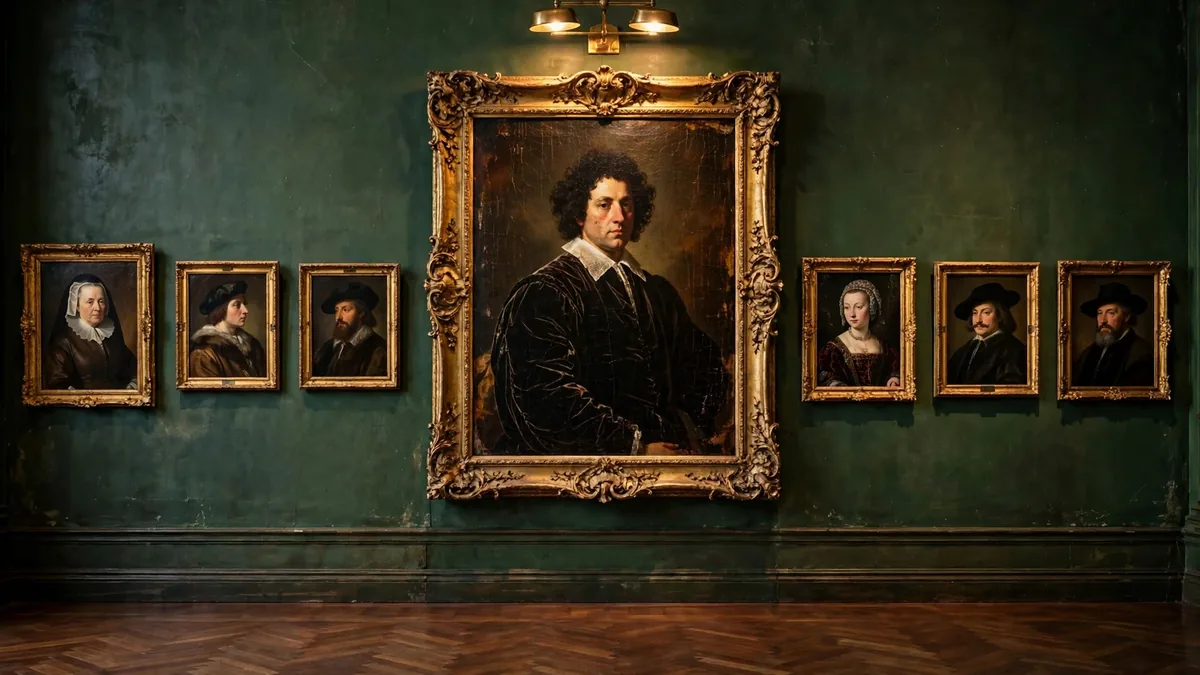
A gallery wall of old-master oil painting portraits in ornate gilded frames, one large Baroque portrait lit by a brass picture light.

Collection · 13 prompts

13 Oil Painting Portrait Prompts for Gemini & Midjourney

There is a particular pleasure in seeing your own face painted the way the old masters painted theirs — candlelit and shadowed like a Baroque portrait, quiet and dignified like a Dutch Golden Age likeness, or sunlit and shimmering like an Impressionist garden scene. This collection is built for that pleasure: thirteen original prompts for an ai oil painting portrait prompt search that actually delivers, written for Midjourney, Gemini, ChatGPT and Nano Banana, each one shaped around a single painting school rather than a generic filter. You will find Baroque chiaroscuro lit by a single candle, a Dutch Golden Age portrait in a lace collar by a leaded window, a Renaissance likeness against a hazy Florentine valley, and an Impressionist portrait in a sunlit garden of broken dabs of colour. There is a museum-wall portrait in an ornate gilded frame, a photo-to-painting conversion that keeps your face exactly, a romantic couple portrait, an old-master self portrait in a beret, and Rococo, Neoclassical, Pre-Raphaelite and Romantic portraits, closing with a bold impasto portrait in thick palette-knife paint. Every prompt works from your own photo, so the face stays yours and only the paint, the light and the period change. Pick the school that suits your mood, copy the prompt into your model of choice, and change one detail at a time — the clothing, the background, the light — until the portrait feels like it belongs on a gallery wall.

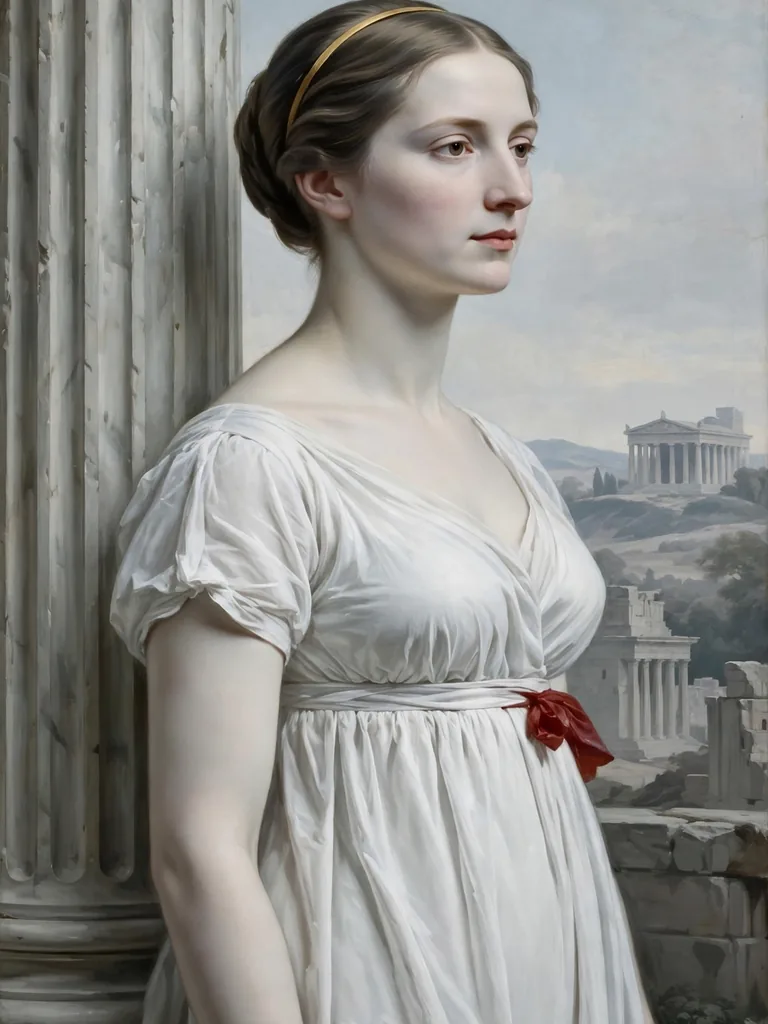
A Neoclassical oil painting portrait of a woman in a white empire gown beside a fluted marble column.
ChatGPT
№ 01

The prompt

Transform your photo into a Neoclassical oil painting portrait — clean, poised and sculptural, with the cool, clear light and crisp draughtsmanship of the late eighteenth century. Keep the face unmistakably yours, with the same eyes and the same composed expression, while the skin is painted in smooth, marble-like tones and the hair is dressed simply, swept back and held with a plain gold band. Dress the portrait in a white empire-waist gown or a dark, tailored coat with a high collar, and set the figure beside a fluted marble column with a soft, pale sky and a distant classical temple behind. The brushwork should be fine and almost invisible on the face, with careful, precise strokes defining the folds of cloth and the carved detail of the column, and the palette restrained — white, stone grey, soft blue and a single note of deep red. Ask for a vertical half-length composition, the figure upright and still, the gaze level and calm, the mood one of quiet dignity and reason. Finish with the cool, even light of a studio that imitates a Roman morning, and the smooth, polished surface of a painting made to last.

Tip: If the portrait feels stiff, ask for the shoulders relaxed a fraction and the gaze softened — Neoclassical calm, not a statue.
Share
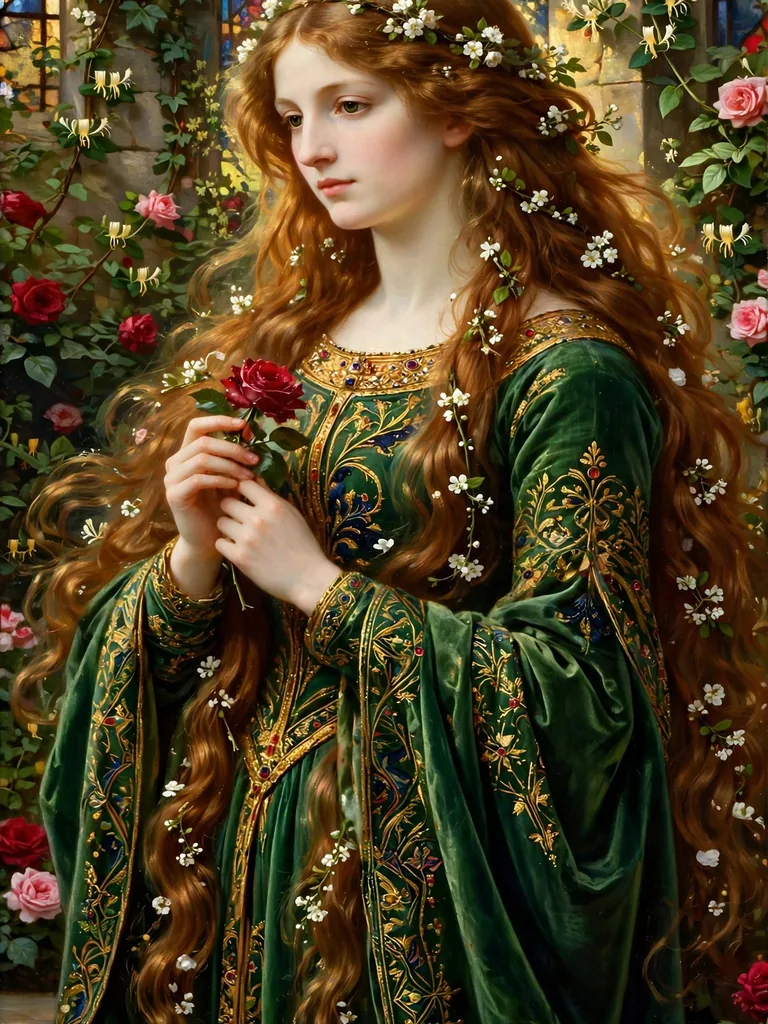
A Pre-Raphaelite oil painting portrait of a woman with flowing auburn hair in a walled garden of roses.
ChatGPT
№ 02

The prompt

Reimagine your photo as a Pre-Raphaelite oil painting portrait — vivid, romantic and richly detailed, with flowing auburn hair, luminous skin and a garden full of flowers. Keep the face recognisably yours, with the same eyes and the same soft, thoughtful expression, while the skin is painted in pale, glowing tones and the hair falls in long, copper waves over the shoulders, threaded with small white blossoms. Dress the portrait in a deep emerald or russet medieval-style gown with long, flowing sleeves, and set the figure in a walled garden of roses, honeysuckle and ivy, with a stone bench and a glimpse of blue sky. The brushwork should be fine and jewel-like, every petal and leaf given its due, with intense, saturated colour — emerald, ruby, gold and deep blue — and no muddy mixing. Ask for a vertical composition, the head tilted slightly, the gaze dreamy and faraway, a single rose held loosely in one hand, the mood that of a ballad or a legend. Finish with the luminous, almost stained-glass quality of the Brotherhood's best work, a portrait that glows from within.

Tip: If the flowers crowd the face, ask for the garden softer and the blossoms smaller, with the hair and eyes kept the sharpest details.

Share
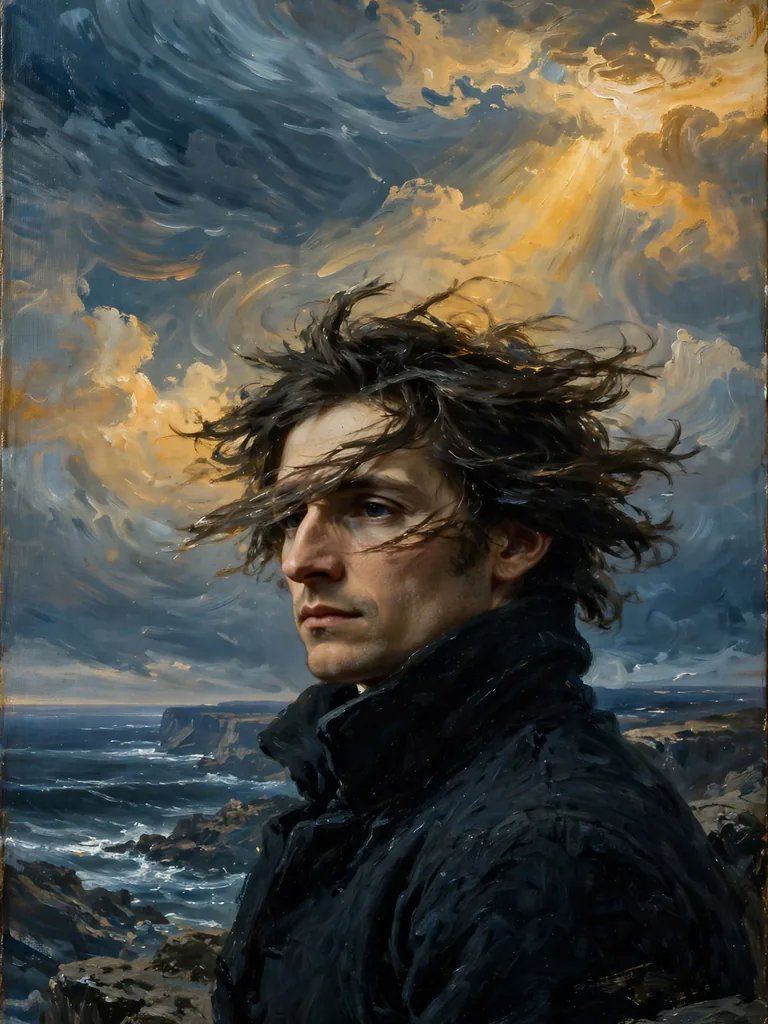
A Romantic oil painting portrait of a figure in a dark coat on a cliff, with a stormy sky and windswept hair.
ChatGPT
№ 03

The prompt

Paint your photo as a Romantic-era oil portrait set against a wild, dramatic landscape — windswept hair, a stormy sky, and the feeling of standing alone on a cliff above the sea. Keep the face recognisably yours, with the same eyes and the same resolute expression, while the skin is lit by a break in the clouds, warm against the cool, turbulent greys and blues of the sky. Dress the portrait in a dark, high-collared coat with the collar turned up against the wind, a scarf loosened by the breeze, and let the hair blow freely across one side of the face. The brushwork should be sweeping and emotional: broad, energetic strokes in the clouds and the sea below, finer and more careful work on the face, with thick highlights where the light breaks through. Ask for a vertical composition, the figure turned three-quarters toward the viewer, the horizon low and the sky vast above, the mood bold and solitary, as if the sitter had climbed the cliff to think. Finish with the dramatic palette of the Romantics — slate, steel blue, warm ochre and a single shaft of golden light.

Tip: If the wind makes the hair a blur, ask for the hair in distinct, windswept strands and the face kept calm and sharply painted.

Share
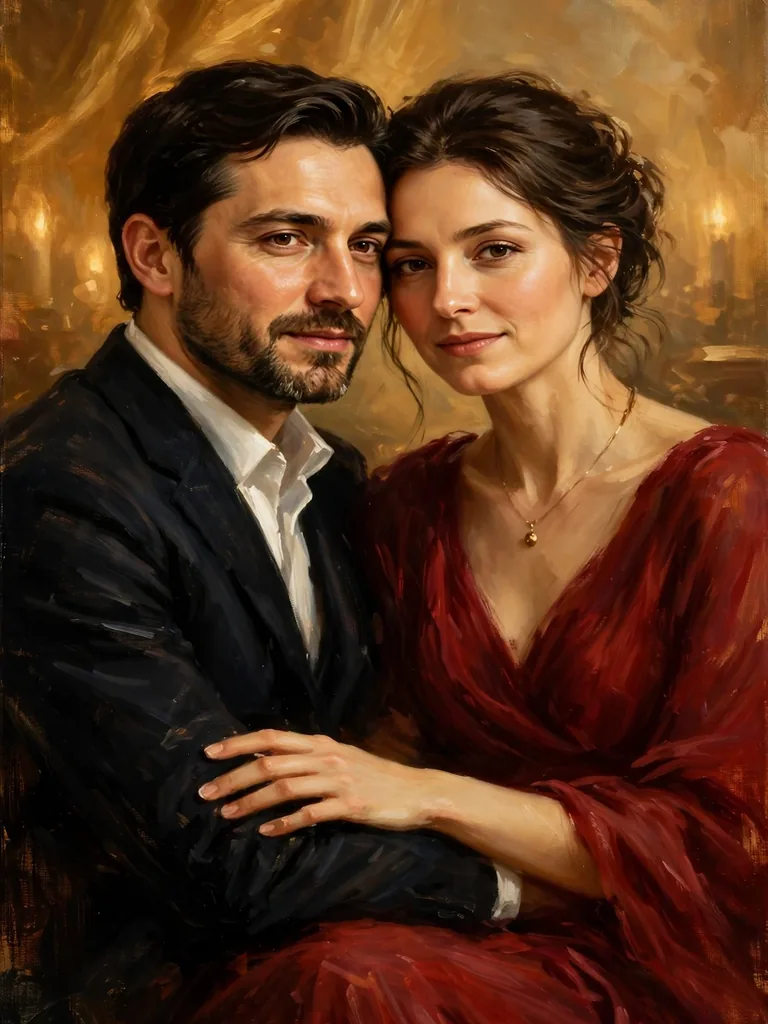
A romantic oil painting double portrait of a couple in warm golden tones, leaning gently toward each other.
Gemini
№ 04

The prompt

Paint our photo as a romantic oil painting double portrait, the two of us side by side in warm, golden tones, like a wedding portrait from a great house a century ago. Keep both faces recognisable — the same eyes, the same smiles, the same way we lean toward each other — while the skin takes on the soft, luminous quality of layered oil paint and the background becomes a warm, hazy interior of deep amber and soft brown. Dress the portrait in elegant, timeless clothing: a dark suit with a white shirt for him, a flowing gown in a deep, rich colour for her, with a small touch of gold jewellery catching the light. The brushwork should be smooth and blended on both faces, with looser, more expressive strokes in the hair, the fabric and the background, and the canvas texture showing faintly in the darker passages. Ask for a vertical composition, the heads close together at the top of the frame, one hand resting gently on the other's arm, the mood tender and unhurried. Finish with the warm varnish glow of a painting kept above a fireplace for generations, a portrait made to be hung and kept.

Tip: If one face drifts, re-upload the original and ask Gemini to match both faces to the photo before adding any painterly detail.

Share
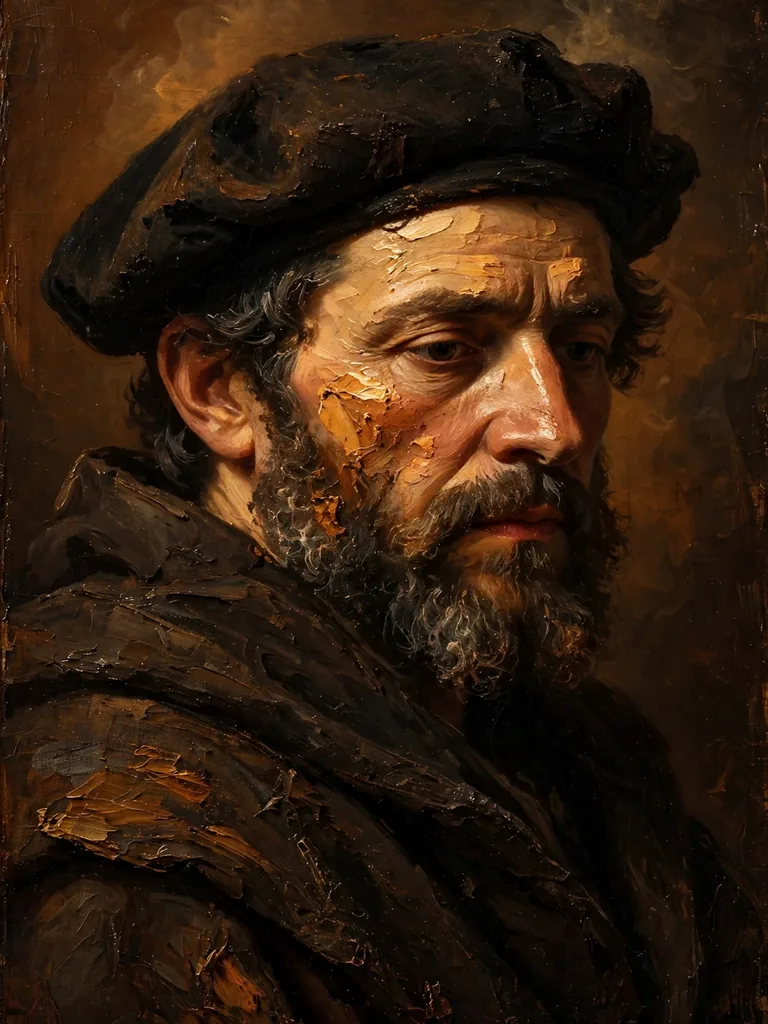
An old-master oil painting self portrait of a man in a dark beret and cloak, lit by warm brown studio light.
Gemini
№ 05

The prompt

Turn my photo into an old-master oil painting self portrait in the manner of the great Dutch painters — a dark beret, a heavy cloak, and warm brown light falling across a thoughtful face. Keep my features exactly as they are in the photo, the same eyes and the same expression, while the skin is modelled with thick, buttery paint on the lit side and thin, transparent glazes sinking into shadow on the other. Set the figure against a deep, warm brown background with a faint, smoky glow behind the head, and let a soft light from the upper left pick out the forehead, the cheekbone and the bridge of the nose. The brushwork should be bold and visible: loaded strokes in the beret and the cloak, fine and careful work around the eyes, and the palette knife's edge showing in the highlights. Ask for a vertical bust portrait, the head turned three-quarters, the gaze direct and quietly confident, the mood that of a painter studying himself in a mirror by candlelight. Finish with the rich, earthy palette of umber, ochre and burnt sienna, and the deep, aged varnish of a canvas painted four centuries ago.

Tip: If the beret looks like a costume, ask for it darker and simpler, with the light doing the work instead of the accessories.

Share
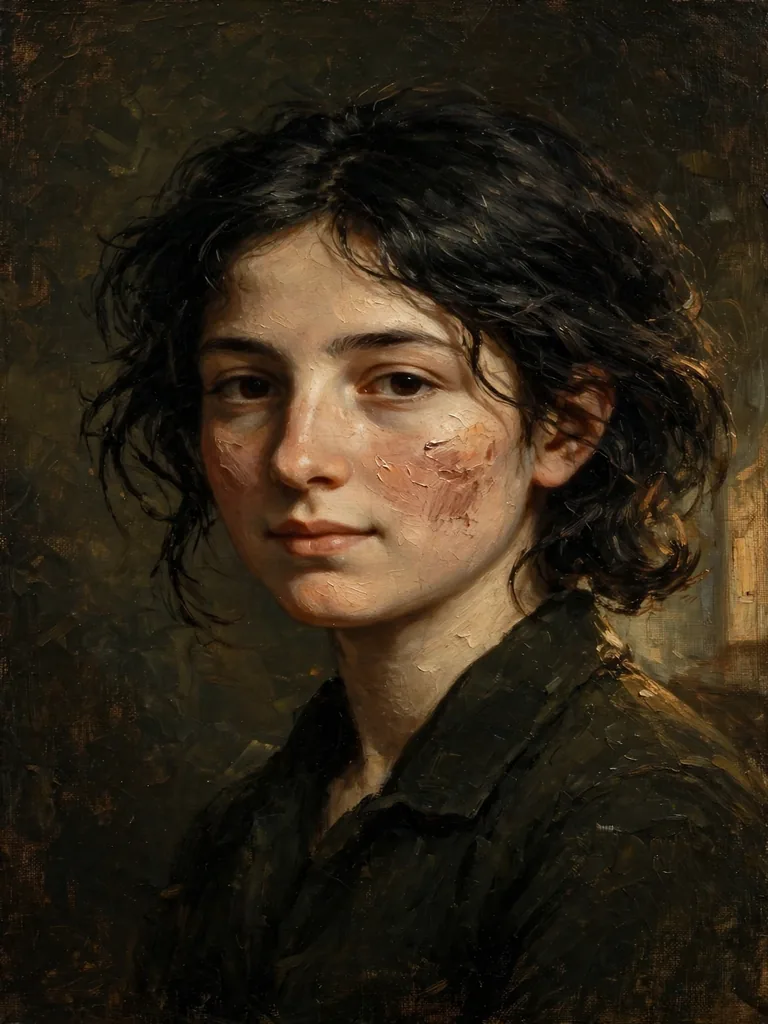
A classical oil painting portrait converted from a photo, with visible brushwork and a dark umber studio backdrop.
Gemini
№ 06

The prompt

Turn my photo into a classical oil painting portrait while keeping my face exactly the same — the same eyes, nose, smile and face shape, only painted. Render the skin in warm, layered oil-paint tones with visible brushwork on the cheeks and forehead, and rebuild the background as a soft, dark studio backdrop in deep umber and olive, the way an old-master portrait painter would. Keep the lighting faithful to the original photo, but soften it into the warm, directional glow of a painter's studio window, with gentle shadow falling on one side of the face. Change the clothing to a simple dark jacket or gown with a plain collar so nothing competes with the face, and add the fine texture of canvas weave and a subtle craquelure across the surface. Ask for a vertical half-length portrait, the head at the same angle as the original photo, the gaze in the same direction, so the painting is unmistakably the same person. The result should look like a portrait commissioned from a skilled painter, not a filter — real brushstrokes, real depth of paint, and a likeness a family member would recognise at once.

Tip: Upload a sharp, front-facing photo with even light — Gemini holds the likeness far better when the original face is clear and unshadowed.

Share
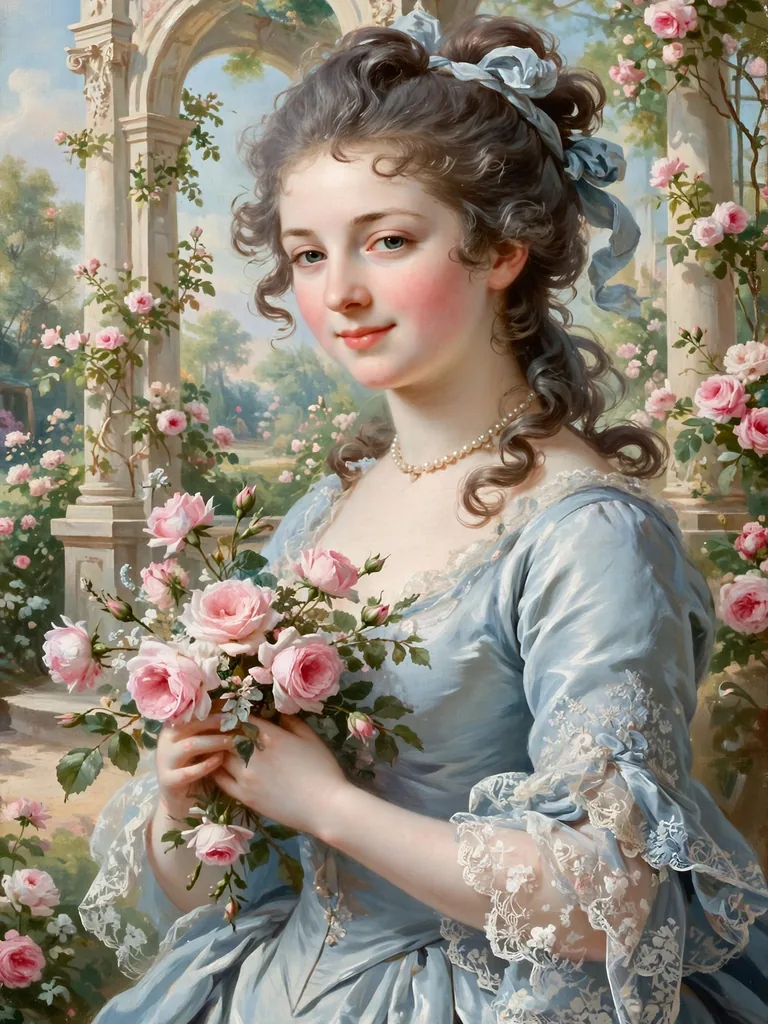
A Rococo oil painting portrait of a woman in a pale blue silk gown with roses, in a sunlit garden pavilion.
Gemini
№ 07

The prompt

Repaint my photo as a Rococo oil painting portrait in soft pastels — powder blue, blush rose and creamy ivory — set in a garden pavilion with roses climbing the trellis behind. Keep my face recognisably mine, with the same eyes and the same gentle smile, while the skin is rendered in delicate, porcelain tones and the hair is swept up softly with a few loose curls and a small silk ribbon. Dress the portrait in a flowing gown of pale blue silk with lace at the sleeves and a string of small pearls, and let a spray of pink roses rest in one hand. The brushwork should be light and feathery, with soft, blended strokes on the face and looser, more playful dabs in the flowers and the foliage, and the whole canvas should feel airy and sunlit. Ask for a vertical half-length composition, the head tilted slightly, the gaze warm and direct, the mood light-hearted and elegant, as if the sitting had taken place on a fine spring morning. Finish with the delicate, confectionery palette of the Rococo — no harsh shadows, only soft, rosy light and the gentle sheen of silk and satin.

Tip: If the pastels wash the face out, ask for the cheeks a touch rosier and the background roses one shade deeper for contrast.

Share
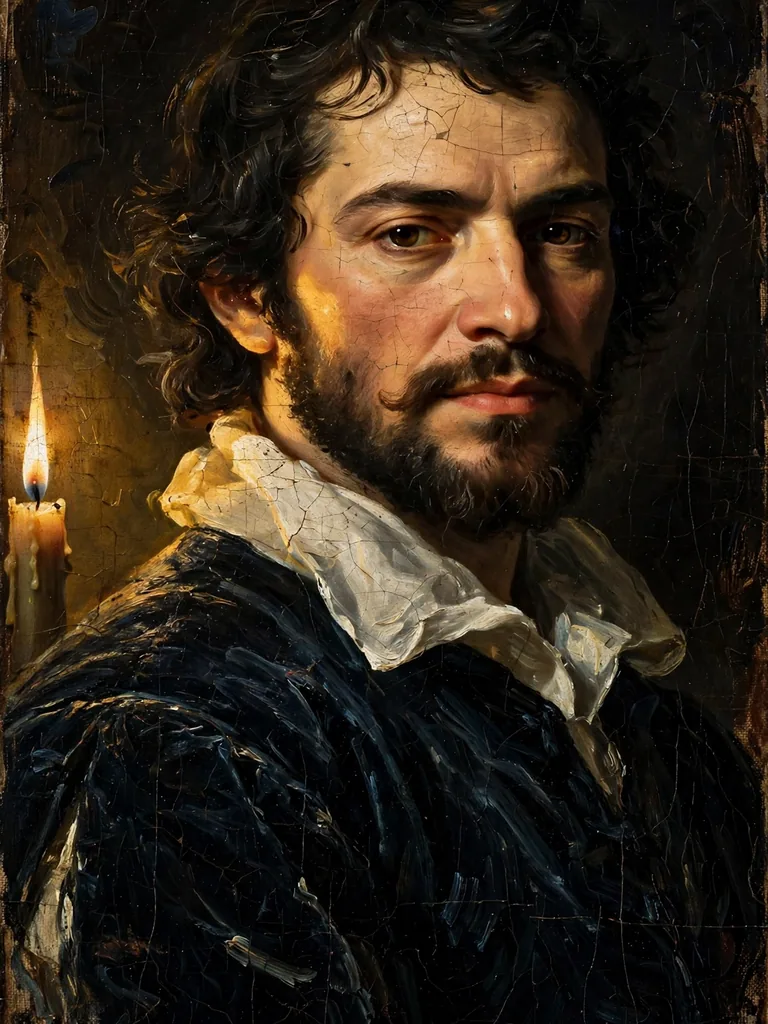
A Baroque oil painting portrait of a man in dark velvet, one side of his face lit by warm candlelight against deep shadow.
Midjourney
№ 08

The prompt

Transform your photo into a dramatic Baroque oil painting portrait in the chiaroscuro manner of the old masters, where a single candle flame lights one side of the face and the rest dissolves into deep, velvety shadow. Keep the sitter's features recognisable — the same eyes, the same jawline, the same quiet expression — while the skin takes on the warm, translucent glow of layered oil paint and the background sinks to near-black umber. Dress the portrait in dark velvet with a soft linen collar, and let a faint glint of gold catch the candlelight on a ring or a chain. The brushwork should be visible and confident: smooth, blended strokes across the forehead and cheeks, looser, loaded strokes in the hair and the folds of cloth, with the canvas weave showing faintly through the darkest passages. Ask for a vertical half-length composition, the head turned three-quarters toward the light, the eyes meeting the viewer with calm intensity, the candle flame just out of frame so its warm glow does all the work. Finish with a subtle craquelure texture and the soft varnish sheen of a painting that has hung in a great house for three hundred years.

Tip: If the shadows swallow the face, ask for the candlelight one step warmer and the lit cheek a touch brighter — never add a second light source.

Share
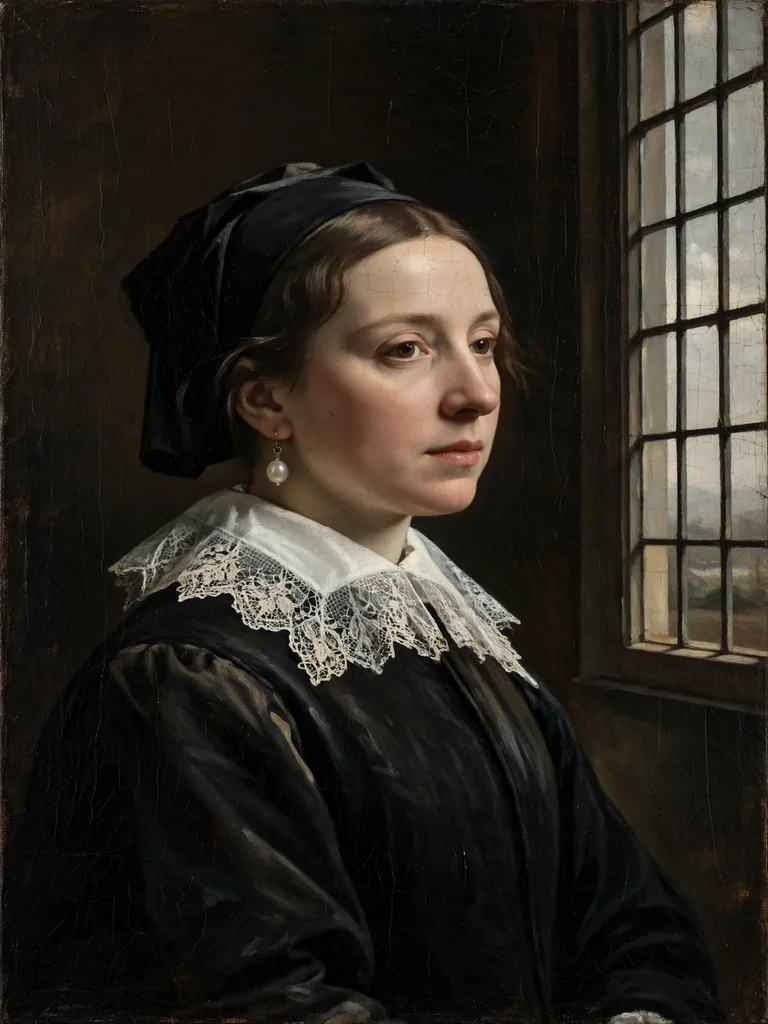
A Dutch Golden Age oil painting portrait of a woman in a white lace collar and black gown, lit by soft window light.
Midjourney
№ 09

The prompt

Turn your photo into a Dutch Golden Age oil painting portrait, the kind of quiet, dignified likeness once hung in a merchant's house in Amsterdam — soft northern light from a tall leaded window, a dark umber background, and a crisp white lace collar against a deep black gown. Keep the face exactly yours, with the same eyes and the same gentle, composed expression, while the skin is rendered in thin, luminous glazes that let a warm underpainting glow through the cheeks. A single pearl earring catches the window light, and the hands, if shown, rest calmly in the lap with a folded letter or a small book. The brushwork should be fine and controlled on the face, looser and more suggestive in the dark clothing, with the linen weave of the canvas just visible in the shadowed passages. Ask for a vertical bust portrait, the head turned slightly toward the window, the gaze steady and direct, the mood modest and assured rather than grand. Finish with the restrained palette of the period — black, ivory, pearl grey and a touch of warm ochre — and the soft, aged varnish of a painting three centuries old.

Tip: If the lace collar turns to mush, ask for the collar painted in fine, crisp strokes and the background kept darker and simpler.

Share
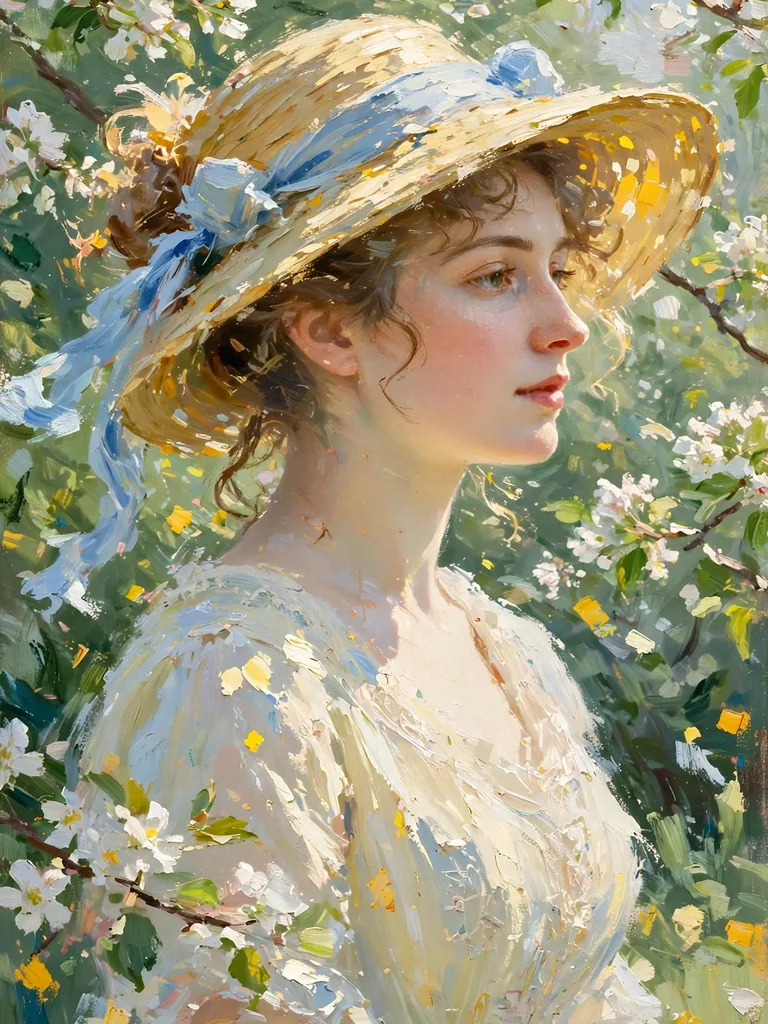
An Impressionist oil painting portrait of a woman in a straw hat in a sunlit garden, painted in broken dabs of colour.
Midjourney
№ 10

The prompt

Paint your photo as an Impressionist oil portrait in a sunlit garden, all broken dabs of colour and dappled light, the way the plein-air painters caught a face in a single bright afternoon. Keep the likeness recognisable — the same eyes, the same smile — while the skin is built from short strokes of peach, rose and warm gold, and the background dissolves into a shimmer of green leaves, white blossom and sky blue. Dress the portrait in a light summer dress and a wide straw hat with a ribbon, and let a parasol or a flowering branch cast soft, dancing shadows across one shoulder. The brushwork should be the star: small, distinct strokes laid side by side, never fully blended, so the whole canvas hums with light, with thicker dabs of white and yellow where the sun strikes the hat brim and the cheek. Ask for a vertical composition, the head tilted slightly toward the sun, the eyes bright and relaxed, the mood easy and unposed, as if the painter had only an hour before the light changed. Finish with the fresh, high-key palette of a summer garden — no black, only deep violet and blue-green for the shadows.

Tip: If the face turns to dots, ask for the strokes smaller and tighter on the face and looser everywhere else — the face holds the likeness.

Share
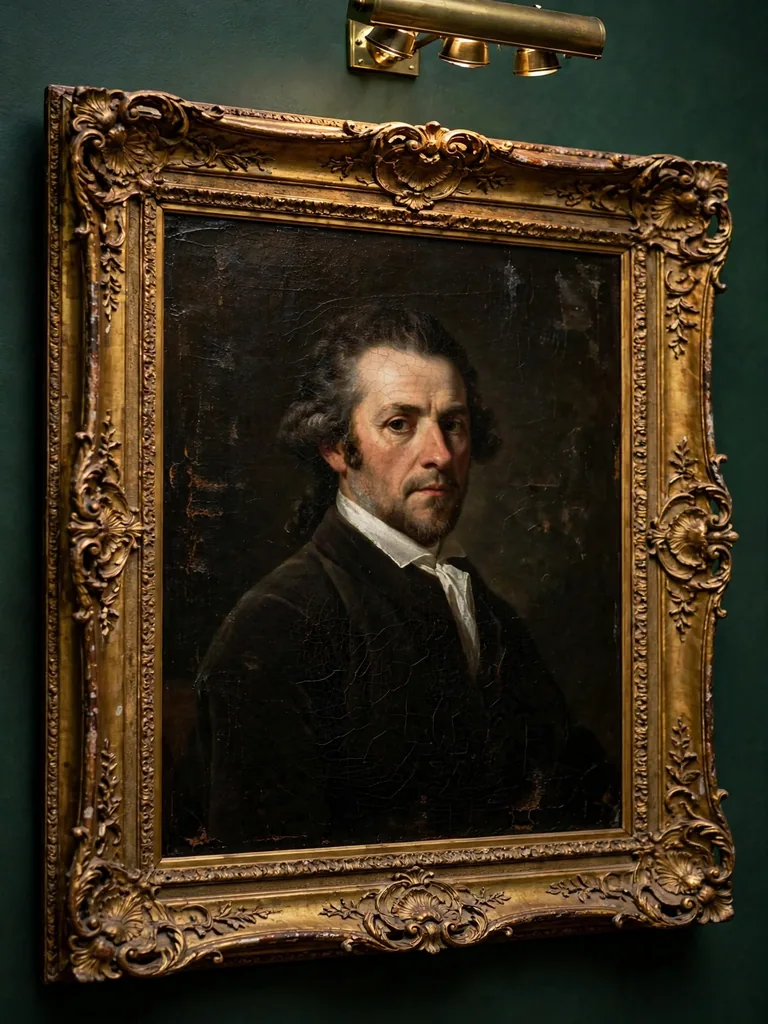
An old-master oil painting portrait in an ornate gilded frame hanging on a deep green museum gallery wall.
Midjourney
№ 11

The prompt

Turn your photo into a grand old-master oil painting portrait hanging on a museum wall, complete with an ornate gilded frame and the soft, respectful light of a gallery. Keep the face unmistakably yours — the same eyes, the same expression — while the skin is painted in warm, layered glazes and the clothing becomes a rich, dark coat or gown with a crisp white collar, in the manner of a seventeenth-century state portrait. The painting itself should fill most of the frame: a dark, atmospheric background of deep brown and olive, the figure lit by a single soft light from the upper left, visible brushwork in the hair and the folds of cloth, and the faint crackle of aged varnish across the surface. Around the canvas, show the carved gold frame with its scrolls and acanthus leaves, hanging on a deep green gallery wall, with a small brass picture light above and a hint of polished wooden floor below. Ask for a vertical composition where the portrait commands the frame and the wall is only a quiet border around it. Finish with the hushed, reverent mood of a great collection — your face, given the full museum treatment.

Tip: If the frame overwhelms the face, ask for the portrait larger inside the frame and the gallery wall reduced to a thin border.

Share
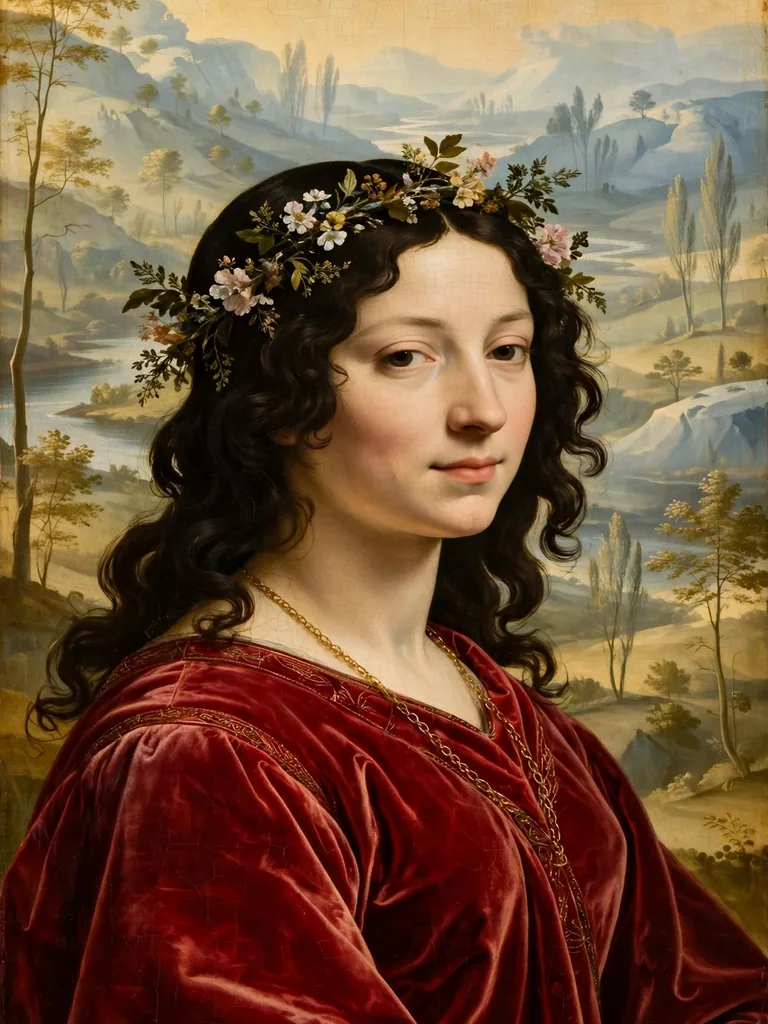
A Renaissance oil painting portrait of a woman in a crimson velvet gown, with a hazy river valley landscape behind her.
Midjourney
№ 12

The prompt

Reimagine your photo as a Renaissance oil painting portrait in the Florentine manner — serene, balanced and quietly idealised, with the soft sfumato blending of the old masters and a distant landscape unfolding behind the sitter. Keep the face recognisably yours, with the same eyes and the same calm half-smile, while the skin is modelled in smooth, seamless tones and the hair falls in soft, dark waves beneath a simple veil or a circlet of small flowers. Dress the portrait in a deep green or crimson velvet gown with a low square neckline and a delicate gold chain, and set the figure against a hazy valley of winding rivers, pale blue hills and a few slender trees. The brushwork should be almost invisible on the face — that is the Renaissance trick — and only slightly more open in the landscape, where the distant hills dissolve into a warm, golden haze. Ask for a vertical half-length composition, the hands folded gently in the lap, the gaze meeting the viewer with quiet confidence, the horizon sitting low so the figure commands the frame. Finish with the warm, honeyed palette of a panel painting that has mellowed over five hundred years.

Tip: If the background landscape steals the portrait, ask for the hills hazier and paler so the figure stays the brightest thing in the frame.

Share
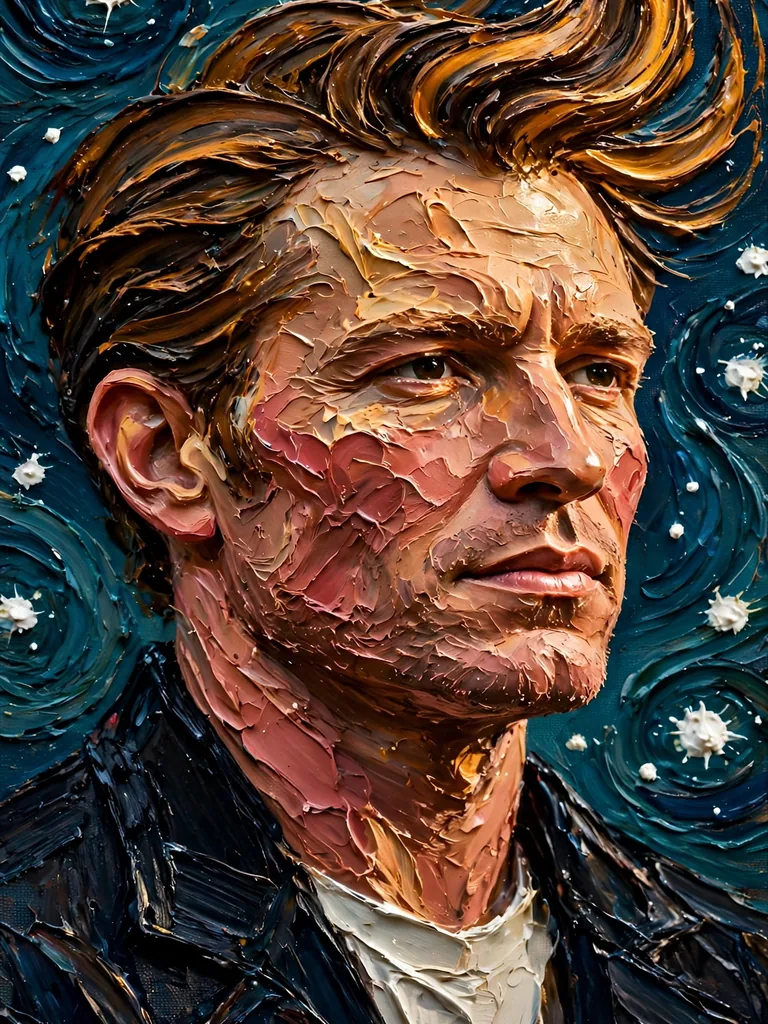
A bold impasto oil painting portrait with thick palette-knife strokes, against a swirling teal night-sky background.
Nano Banana
№ 13

The prompt

Turn my photo into a bold impasto oil painting portrait, where the paint stands proud of the canvas in thick, sculptural strokes laid on with a palette knife. Keep my face recognisable — the same eyes, the same smile — while the skin is built from ridges of warm peach, gold and rose, and the hair becomes sweeping ribbons of dark brown and amber. Set the figure against a swirling background of deep teal and midnight blue, the paint curling and eddying like a night sky, with a few bright stars of thick white paint scattered through it. The brushwork is the whole point: no smooth blending anywhere, every stroke visible and deliberate, the light catching the raised edges of the paint so the portrait changes as you move around it. Dress the portrait simply, in a dark jacket over a plain shirt, so the texture of the paint carries the drama. Ask for a vertical bust portrait, the head turned slightly, the gaze direct and warm, the mood confident and alive. Finish with the tactile, almost three-dimensional surface of a painting you want to reach out and touch, thick paint, bold colour, and a likeness that survives every stroke.

Tip: If the impasto swallows the eyes, ask for the strokes flatter and finer around the eyes and the thickest paint reserved for the hair and background.

Share

Step by step

How to make oil painting portraits from these prompts

  1. 1

    Start with the school, not the model. Pick the painting style that suits the mood you want: Baroque chiaroscuro for drama, Dutch Golden Age for quiet dignity, Renaissance for serenity, Impressionism for sunlight, the museum wall for grandeur. The school decides the light, the palette and the brushwork, so start there and let the model follow. 2. Upload a sharp, front-facing photo. Oil painting prompts work best from a clear original — even light, both eyes visible, nothing covering the face. A dark, blurry or heavily angled photo gives the model too little to hold on to, and the painted likeness drifts into a stranger. Gemini and ChatGPT are the most faithful to your face in this collection. 3. Copy the prompt and change one detail first. The easiest first change is the clothing colour or the background tone — swap the velvet for a lighter fabric, the dark umber for a warm olive — or the time of day in the landscape prompts. One change per run keeps the result predictable; changing the school, the outfit and the lighting at once makes it hard to tell what went wrong. 4. If the face drifts, shorten the prompt and re-upload the original photo. Oil painting prompts carry a lot of decoration — frames, landscapes, period costume — and long prompts give the model room to reinvent the face. Trim the decoration, add a plain instruction to keep the same face and skin tone, and let the brushwork do the painterly work. 5. If the result looks like a photo filter, name the paint. Ask for visible brushwork, impasto, palette-knife strokes or canvas weave by name, and the model will lean into the painted surface. The Baroque and impasto prompts are the strongest starting points for a visibly painted look, and one strong painting instruction beats a paragraph of vague styling. 6. Print it like a painting, not a photo. These portraits are made to be hung: print on textured matte paper or canvas, frame it in gold or dark wood, and hang it where the light falls across it from the side, the way a gallery lights an old master. A painted portrait of yourself, properly framed, is a family piece — not a phone wallpaper.

Questions, answered

Frequently Asked Questions

Which model should I start with for oil painting portraits?

Start with Gemini — four of this collection's thirteen prompts were written for it, and it is the strongest at keeping your face recognisable when editing your own photo. Use Midjourney for the five most painterly scenes — Baroque chiaroscuro, Dutch Golden Age, Renaissance, Impressionist garden and the museum wall — ChatGPT for the Neoclassical, Pre-Raphaelite and Romantic portraits, and Nano Banana for the thick impasto portrait.

Can I use my own photo with these oil painting prompts?

Yes — that is how they are meant to be used. Upload a clear photo of yourself, then paste the prompt alongside it. The model keeps your face and rebuilds the painting around it: the brushwork, the old-master lighting, the period clothing and the dark, atmospheric background. A sharp, front-facing, well-lit photo gives the best result; a dark or blurry original gives the model too little to hold on to and the likeness drifts.

How do I get a real painted look instead of a photo filter?

Name the paint. Ask for visible brushwork, impasto, canvas weave or craquelure by name, and the model will lean into the painterly surface instead of smoothing it away. If a result comes back looking like a photograph with a filter, shorten the prompt and add one strong painting instruction — 'thick palette-knife strokes' or 'visible canvas texture' — and run it again. The Baroque and impasto prompts are the best starting points for a visibly painted look.

Which painting school suits my photo best?

Each prompt is built around one school, so the style is already named for you: Baroque means deep shadow and a single candle flame, Dutch Golden Age means soft window light and a dark background, Impressionism means broken dabs of colour in a sunlit garden. If you want a different school, swap the style words but keep the rest of the prompt — the face instructions, the composition and the lighting — so the likeness survives the change.

Will the painting still look like me?

The prompts are written to be honest about it: a painted portrait is a stylised likeness, not a photograph, and the brushwork will always soften the finest detail. The face instructions in every prompt — keep the same eyes, the same smile, the same face shape — hold the likeness, and Gemini and ChatGPT hold it best. If a run drifts, re-upload the original photo, trim the decorative detail, and ask plainly for the same face.

Can I use the oil painting portraits commercially?

For personal use — printing for the home, sharing with family, posting a painted portrait of yourself — that is what these prompts are for. For commercial use, such as a studio's advertising, a book cover or anything you sell, check the terms of the AI platform that generated the image, since commercial rights vary by platform and plan. We are not giving legal advice; the platform's own terms are the authority.

Keep browsing

More collections